How to Avoid Vendor Lock-In When Building Custom Software
Custom software should make you more independent, not trade one dependency for a worse one.
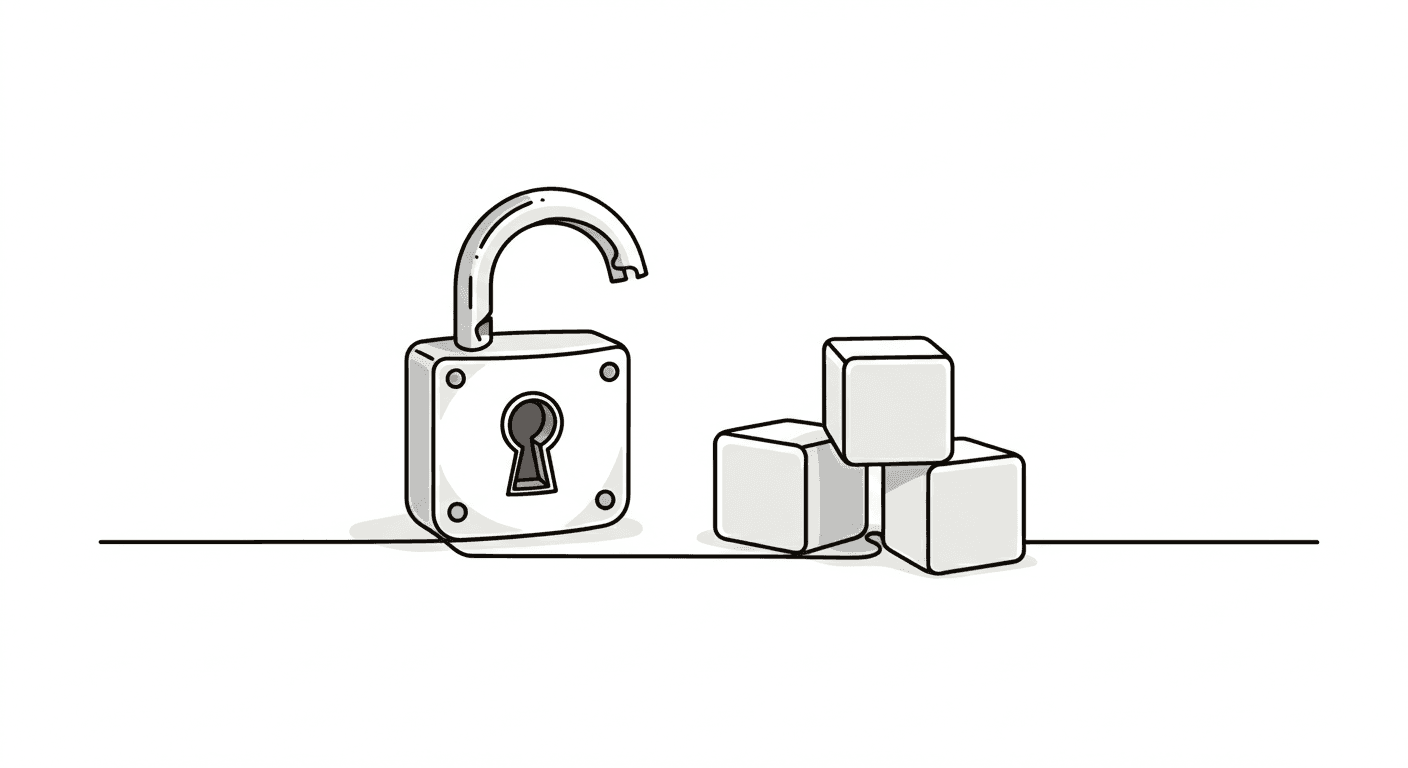
The irony of bad custom software deals: companies leave off-the-shelf tools to escape dependency, then sign contracts that make them more captive than any SaaS ever did. The vendor owns the code, hosts it on accounts you can't access, documents nothing, and prices every change knowing you can't leave.
Lock-in is rarely one dramatic clause. It's an accumulation of small defaults — each reasonable-sounding — that quietly raise your switching cost until "we should change vendors" becomes "we can't afford to change vendors." Every one of them is preventable at signing time.
Own the Assets: What the Contract Must Say
- Full IP assignment — You own the code, the designs, and the data. Work-for-hire, assigned on payment, no carve-outs for "vendor frameworks" broad enough to swallow your product.
- Source code access from day one — Not delivered at the end; you have read access to the repository throughout the build. If the relationship ends mid-project, you keep everything built so far.
- Third-party components enumerated — Open-source licenses listed, no proprietary vendor libraries baked into your core product. If they must use their internal tooling, the contract needs a perpetual license.
- An explicit exit clause — Termination terms, handover obligations (code, docs, credentials, data), and a defined transition-support period, typically 30–60 days.
Own the Infrastructure
The most common lock-in isn't code — it's accounts:
| Asset | Where it should live |
|---|---|
| Cloud infrastructure (AWS/GCP/Vercel) | Your organization's account; vendor gets scoped access |
| Domain and DNS | Your registrar account |
| Databases and backups | Your cloud account, with backup access verified |
| API keys and secrets | Your vault; rotatable without the vendor |
| App store listings | Your developer accounts |
A vendor who insists on hosting everything under their own accounts "for convenience" is building your dependency, not your product. The test is simple: if the vendor vanished tomorrow, could you deploy the app without them? If not, you don't own your product — you subscribe to it.
Architecture Choices That Keep You Portable
- Boring, mainstream stack — React/Next.js, Node/Python, PostgreSQL: thousands of teams can pick these up. A vendor's exotic in-house framework means only they can maintain it — which is often the point.
- Documentation as a deliverable — A setup guide that gets a new engineer running locally, an architecture overview, and API docs. Make it a paid milestone; undocumented systems are lock-in by neglect.
- Standard deployment, not tribal knowledge — CI/CD defined in code, environment variables documented, one-command deploys. If deployment lives in one engineer's head, that head owns you.
- Data export paths — Your data in a standard database you can dump, not an opaque store only their code reads.
The Handover Test, Before You Need It
Don't wait for a breakup to discover the handover is fiction. Run a rehearsal: at some mid-project milestone, have a technical person (in-house or an independent reviewer) clone the repo, follow the docs, run the app locally, and deploy to staging. Every gap they hit is a switching cost the vendor still holds. Good vendors welcome this test; captive-by-design vendors resist it.
The Bottom Line
Vendor lock-in is decided at contract time and confirmed by architecture — own the IP, own the accounts, demand documentation, and rehearse the handover while the relationship is still good. Reality Rift hands over full source code and IP as standard, builds on mainstream stacks, and deploys into infrastructure you own — we'd rather be re-hired for being good than retained for being irreplaceable.
Before you sign with anyone, book a free 15-minute call — we'll tell you exactly what to demand in the contract, even if you don't hire us.
Have a project in mind?
Tell us what you're building. We'll give you a straight answer on scope, timeline, and cost — free, 15 minutes.