Build vs Buy Software: How to Decide as a Business Leader
Navigating the Strategic Crossroads of Digital Product Investment
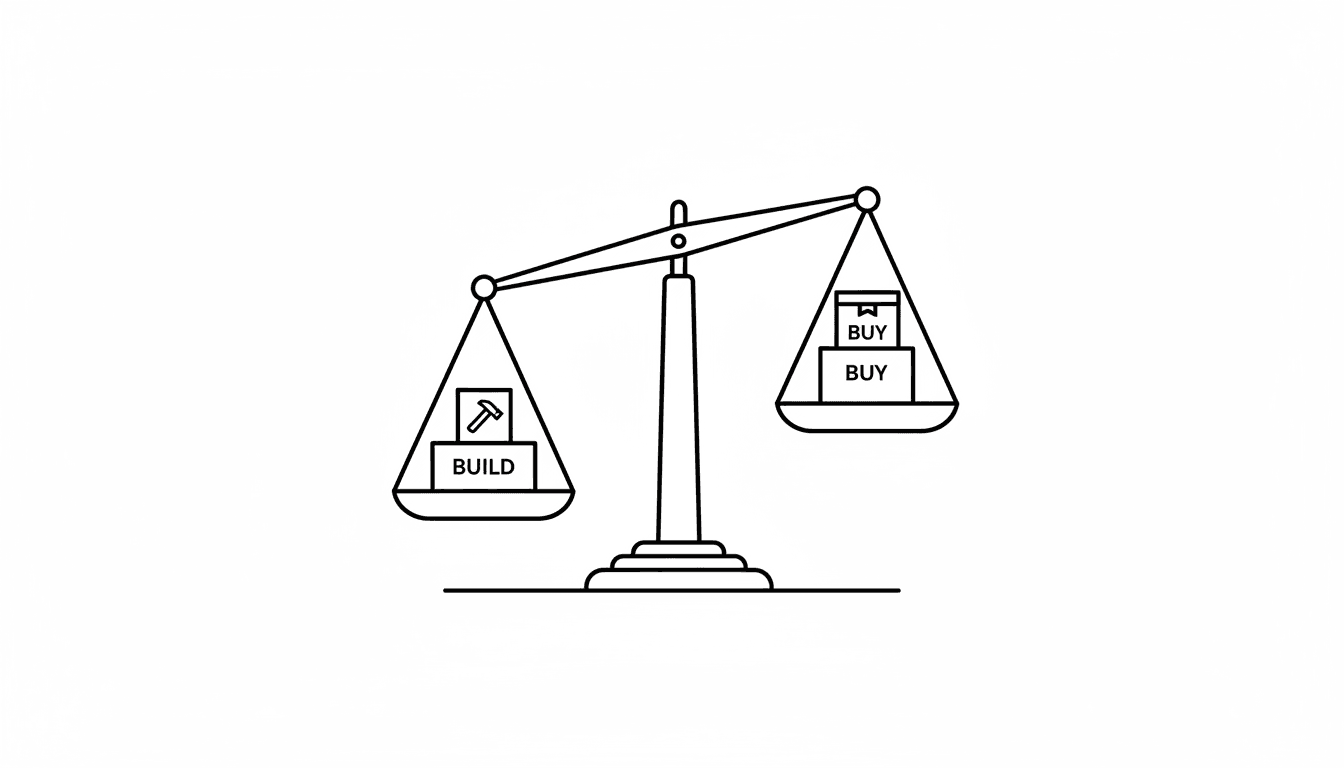
In the contemporary digital landscape, the decision to invest in new software isn't merely operational; it's profoundly strategic. Every CTO, founder, and product leader confronts a fundamental dilemma that can shape their organization's trajectory for years: should we build vs buy software? This isn't a simple cost comparison, but a complex evaluation of long-term strategic advantage, operational agility, resource allocation, and market differentiation.
This choice dictates whether you own your intellectual property, control your innovation roadmap, or leverage established solutions for speed and efficiency. Misjudgment here can lead to vendor lock-in, missed market opportunities, or unsustainable development costs. Our objective here is to furnish you with a robust framework to navigate this critical decision, ensuring your software investments align precisely with your business objectives.
The Strategic Imperative: When to Build Custom Software
Opting to build custom software is a commitment to differentiation. It’s the path chosen when off-the-shelf solutions simply cannot meet a unique strategic requirement, or when the software itself is the core business. This decision is less about avoiding licensing fees and more about securing a proprietary edge.
Key Strategic Triggers for Building:
- Core Business Differentiator: If the software directly contributes to your unique value proposition, competitive advantage, or is the product you sell, building is often the only viable path. It allows for the creation of proprietary features that cannot be replicated by competitors simply buying the same SaaS.
- Unmet Niche Requirements: Your business processes are highly specialized, or you operate in a unique industry where no commercial software adequately addresses your specific needs. Trying to force a generic solution into a bespoke workflow often results in costly customizations, workarounds, and reduced efficiency.
- Full Control Over Roadmap & IP: Building grants you complete ownership of the source code and intellectual property. This means you dictate every feature, every integration, and every future iteration, free from vendor roadmaps, price increases, or feature deprecations. It’s essential for businesses where software defines their strategic agility.
- Complex Integration Landscape: You have a highly complex existing ecosystem with multiple legacy systems, and off-the-shelf solutions struggle to integrate seamlessly without significant, custom middleware development. Building allows for a tailored integration strategy.
- Specific Performance or Scalability Needs: Your application demands extreme performance, handles massive data volumes, or requires a unique architecture that commercial products cannot provide without substantial, unfeasible compromises.
- Security & Compliance: For highly regulated industries or applications handling sensitive data, custom builds can offer a higher degree of control over security architecture and compliance certifications, tailored to exact specifications rather than relying on a vendor's blanket assurances.
Typical Scenarios for Building:
- Developing a new SaaS product for a specific market.
- Creating proprietary AI/ML models for unique data analysis or automation.
- Building specialized internal operational tools that offer a competitive edge.
- Developing advanced data dashboards or analytics platforms that integrate diverse data sources in a novel way.
- Crafting unique mobile or web applications that provide a distinct user experience.
Realistic Cost & Time Considerations for Building:
Building custom software is an investment. While exact figures vary wildly based on complexity, team, and technology stack, here are typical industry ranges:
- Initial Development Time: For a moderately complex web application or MVP, expect 6 to 12 months. For highly complex platforms, enterprise systems, or AI solutions, this can extend to 12 to 24+ months.
- Initial Development Cost: For a well-scoped custom solution, budgets typically range from $150,000 to over $1,000,000. This encompasses discovery, design, development, testing, and initial deployment.
- Ongoing Maintenance & Evolution: Post-launch, anticipate allocating 15% to 25% of the initial development cost annually for maintenance, bug fixes, security updates, infrastructure, and feature enhancements. This is crucial for long-term viability and competitiveness.
The Pragmatic Approach: When to Buy Off-the-Shelf Software
Buying software, typically a SaaS subscription, is often the sensible choice for non-differentiating functions. It prioritizes speed, cost predictability, and leveraging established best practices. This route is about efficiency and focusing internal resources on core competencies.
Key Strategic Triggers for Buying:
- Commodity Functionality: The software addresses a common business need that is not unique to your organization (e.g., CRM, HRIS, accounting, standard project management, email marketing). These are functions where industry best practices are well-defined and widely available.
- Speed to Market: You need a solution deployed rapidly. Buying eliminates the lengthy development cycle, allowing for quicker implementation and faster realization of benefits.
- Predictable Operating Costs: SaaS models typically involve subscription fees, offering clear, recurring expenses. This simplifies budgeting and avoids the large upfront capital expenditure associated with custom builds.
- Reduced Operational Burden: The vendor is responsible for hosting, maintenance, security, updates, and support. This offloads significant IT overhead and allows your internal team to focus on strategic initiatives.
- Leveraging Industry Best Practices: Commercial software often incorporates years of development, user feedback, and industry-standard workflows, providing a mature and robust solution out-of-the-box.
- Access to Specialized Features: Many commercial platforms offer advanced features or integrations that would be prohibitively expensive or time-consuming to build in-house.
Typical Scenarios for Buying:
- Implementing an enterprise resource planning (ERP) system.
- Adopting a customer relationship management (CRM) platform.
- Deploying standard marketing automation tools.
- Using off-the-shelf collaboration and communication platforms.
- Basic analytics and reporting tools that don't require novel data integration.
Realistic Cost & Time Considerations for Buying:
While buying can be faster and seemingly cheaper, it comes with its own financial and time commitments:
- Implementation Time: Depending on complexity and customization, implementation can range from a few weeks for basic setup to 3-6 months for enterprise-level deployments with data migration and integration.
- Software Cost: Subscription fees can range from $50/user/month for small teams to $10,000+/month for enterprise-level solutions. Many vendors also charge significant implementation and training fees, which can be 1x to 3x the annual subscription cost.
- Hidden Costs: Be aware of costs for add-ons, premium support, API access, data storage overages, and potential consulting fees for deep customization or integration that the vendor might not cover.
Build vs Buy Software: A Strategic Framework for Decision-Making
To make an informed decision, a structured approach is essential. Consider these criteria and red flags:
Decision Criteria Checklist:
- Core Competency Alignment: Does this software directly support or enhance your core business functions and competitive advantage?
- Build: Yes, it's central to our unique value.
- Buy: No, it's a supporting, non-differentiating function.
- Competitive Differentiation: Does this software create a unique offering or operational efficiency that competitors cannot easily replicate?
- Build: Yes, it's proprietary and strategic.
- Buy: No, it’s standard and widely available.
- Total Cost of Ownership (TCO): Beyond upfront costs, what are the long-term expenses including development, licensing, maintenance, support, infrastructure, and potential customization?
- Build: Higher upfront, potentially lower long-term if maintained efficiently and provides significant ROI.
- Buy: Lower upfront, recurring subscription, potential for escalating costs with scale or specific features.
- Time to Market: How quickly do you need this functionality deployed and operational?
- Build: Longer, but tailored to exact needs.
- Buy: Faster, but with potential compromises.
- Flexibility & Customization: How unique are your requirements, and how much control do you need over future features and integrations?
- Build: Infinite flexibility, full control.
- Buy: Limited to vendor's roadmap, customization often expensive and fragile.
- Integration Complexity: How well will the solution fit with your existing technology stack and data flows?
- Build: Designed for your ecosystem from the ground up.
- Buy: Relies on vendor APIs and connectors, which can be restrictive.
- Risk Profile: What are the risks associated with each option (vendor lock-in, project failure, security vulnerabilities, maintenance burden)?
- Build: Development risk, ongoing maintenance burden, internal talent dependency.
- Buy: Vendor lock-in, feature bloat, security reliance on third-party, potential for sunsetting product.
- Scalability Requirements: Can the solution grow with your business needs over the next 3-5 years?
- Build: Architected for specific future growth.
- Buy: Dependent on vendor's infrastructure and pricing tiers.
- Internal Talent & Resources: Do you have the internal expertise to build, maintain, and evolve the software, or to manage and optimize a purchased solution?
- Build: Requires significant internal engineering and product management.
- Buy: Requires implementation and administrative expertise, less core engineering.
Red Flags for Building When You Should Buy:
- Reinventing the Wheel: Your proposed custom solution replicates functionality that is widely available, robust, and cost-effective through commercial products.
- Lack of Internal Expertise: You lack the in-house technical talent and leadership to successfully build, deploy, and, critically, maintain the custom software long-term.
- Unclear Requirements: The project scope is ill-defined, and requirements are fluid. Custom builds thrive on clarity; ambiguity leads to scope creep and budget overruns.
- Underestimated TCO: Your cost projections for building only account for initial development, ignoring the significant ongoing costs of maintenance, infrastructure, security, and future enhancements.
Red Flags for Buying When You Should Build:
- Over-Customization: You find yourself needing to extensively customize an off-the-shelf solution to fit your unique processes, often requiring expensive professional services or fragile workarounds. This negates the benefits of buying.
- Vendor Lock-in: The purchased solution creates a dependency that makes it difficult or costly to switch vendors, migrate data, or integrate with other critical systems.
- Feature Bloat & Unused Functionality: You are paying for a vast array of features that your business will never use, increasing complexity and cost without adding value.
- Integration Nightmares: The off-the-shelf product struggles to integrate seamlessly with your existing, critical systems, leading to data silos, manual workarounds, and operational inefficiencies.
The Bottom Line
The build vs buy software decision is rarely straightforward, demanding a rigorous, strategic assessment tailored to your organization's unique context and long-term vision. It's about understanding where your competitive advantage lies and allocating resources accordingly.
At Reality Rift, we understand this nuance deeply. As a studio that not only builds custom AI products, web, and mobile applications from scratch for our partners — never relying on templates or rebranded off-the-shelf tools — but also develops and operates our own flagship product, HelloAria, with 30,000+ users across 80+ countries, we live the build lifecycle every day. Our engagement model, featuring a free working demo, fixed-price discovery, and full source code and IP handover, is designed to de-risk the custom build path, ensuring alignment with your strategic objectives from conception through deployment and ongoing support.
If your strategic imperative points towards building unique, differentiating software or AI solutions that create proprietary value, let's discuss how we can bring your vision to life. Book a free 15-min call.
Have a project in mind?
Tell us what you're building. We'll give you a straight answer on scope, timeline, and cost — free, 15 minutes.