How to Balance Speed and Quality When Outsourcing Development
Navigating the critical trade-offs between rapid delivery and robust solutions in external software partnerships.
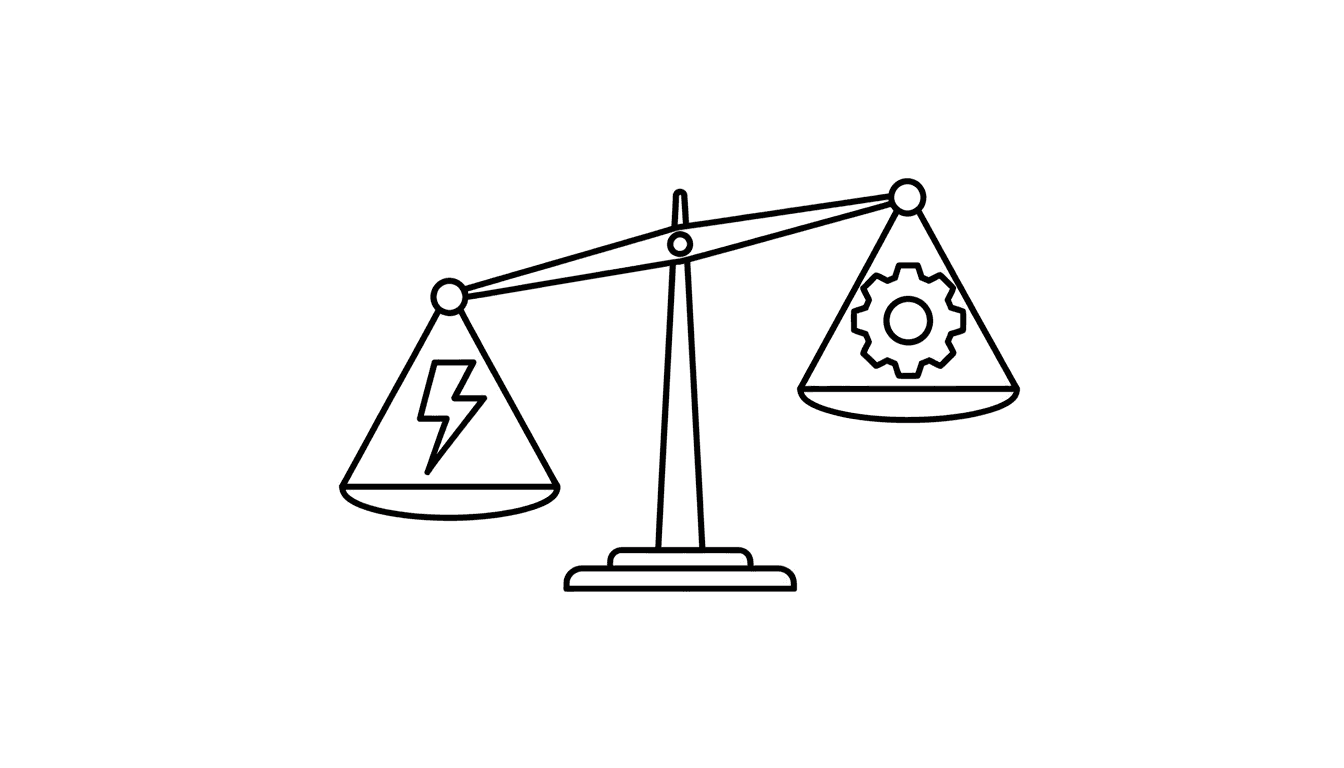
For senior decision-makers like CTOs, founders, and product leaders, the decision to outsource software development is often driven by a need for specialized expertise, accelerated timelines, or scalable resources. Yet, this strategic move frequently introduces a core dilemma: how to balance speed and quality when outsourcing development. The pressure to launch quickly can clash with the imperative for a robust, scalable, and maintainable product, leading to technical debt, security vulnerabilities, or a poor user experience if not managed proactively.
This isn't merely a tactical challenge; it's a strategic one that shapes your product's future, market position, and operational efficiency. The right partnership and process can transform this perceived trade-off into a synergistic advantage, delivering both rapid innovation and enduring value. The wrong approach, however, risks costly rework, missed market opportunities, and ultimately, a product that fails to meet its objectives.
Understanding the Speed vs. Quality Spectrum
Before diving into strategies, it's crucial to acknowledge that "speed" and "quality" are not always mutually exclusive, nor are they always equally weighted. Their optimal balance is highly dependent on your project's specific context, strategic goals, and market demands. A mission-critical SaaS platform requires a different quality threshold than an internal automation tool, just as a market-entry MVP demands different speed considerations than a mature product's next major iteration.
Consider the following framework to position your project on the spectrum:
| Project Priority | High Urgency (Speed Focus) | Flexible Timeline (Quality Focus) |
|---|---|---|
| High Criticality | MVP for Rapid Validation: Core features, robust architecture, minimal technical debt. Prioritize stability over exhaustive features. | Build for Scale & Resilience: Comprehensive testing, advanced architecture, security by design. Long-term maintainability is key. |
| Low Criticality | Proof-of-Concept/Internal Tool: Functional, fast delivery, acceptable short-term technical debt. | |
| Feature Enhancement: Quick integration, minimal disruption to existing systems. | Refactoring/Optimization: Improve existing code, enhance performance, reduce technical debt. |
- Defining "Speed": This encompasses time-to-market, iteration velocity, and the ability to pivot rapidly. It's about getting functional software into users' hands quickly to gather feedback and capture market share. High speed often means tighter deadlines and a focused scope.
- Defining "Quality": This is multi-faceted, including code robustness, scalability, security, user experience (UX), maintainability, and adherence to best practices. High quality ensures your product is resilient, performs reliably, can evolve, and provides a positive user experience. Compromising quality can lead to significant technical debt, security vulnerabilities, and higher long-term costs.
- Impact of Choices: A pure speed play might win early users but lead to a fragile product that's expensive to maintain or impossible to scale. A pure quality play might result in a perfect product that misses its market window. The sweet spot lies in making informed, intentional trade-offs aligned with your business objectives.
Strategic Partner Selection: Beyond the Rate Card
The choice of an outsourcing partner is perhaps the single most critical factor in achieving the right balance. It's not about finding the cheapest hourly rate; it's about identifying a strategic ally who understands your vision and can execute with both velocity and precision. Here are key evaluation criteria:
- Proven Track Record & Domain Expertise: Look for partners who don't just talk about building software, but who have successfully built and scaled their own products. This demonstrates a deep understanding of the entire product lifecycle, from ideation to deployment and support. For example, a studio that builds and runs its own flagship productivity platform, like HelloAria (helloaria.io) with 30,000+ users across 80+ countries, inherently understands the demands of real-world product delivery and user satisfaction.
- Technical Depth & Specialization: Can they build from scratch, without relying on templates or rebranded off-the-shelf tools? Do they possess expertise in your required technologies, including cutting-edge areas like AI? A partner specializing in custom solutions (AI products, web apps, mobile apps, dashboards, automation, integrations, SaaS platforms) ensures your unique requirements are met with tailored, robust engineering.
- Transparent Engagement Model: A partner committed to quality and speed will offer a clear, risk-mitigated engagement process. This includes:
- Free Working Demo: Proof of concept before significant commitment.
- Paid Fixed-Price Discovery: A dedicated phase to define scope, architecture, and mitigate risks upfront, preventing costly surprises later.
- Milestone Billing Tied to Working Software: Payment released only upon demonstrable progress and functional deliverables, ensuring accountability.
- Full Source-Code and IP Handover: You own your intellectual property from day one, without caveats.
- Post-Launch Support: They deploy, monitor, and support the application after launch, demonstrating a commitment to long-term success.
- Robust Technology Partnerships: Affiliations with leading cloud providers and technology innovators (e.g., NVIDIA Inception, AWS, Google Cloud, Vercel) indicate a commitment to best-in-class infrastructure and tooling, which directly impacts scalability, security, and performance.
- Communication & Cultural Fit: Effective communication is the bedrock of successful outsourcing. Evaluate their processes for updates, feedback loops, and conflict resolution. A partner whose values align with yours will be a more effective extension of your team.
Red Flags to Watch For:
- Unrealistic Estimates: If an estimate seems too good to be true, it likely is. Underbidding often leads to scope creep, rushed work, or hidden costs.
- Lack of Discovery Phase: Skipping a thorough discovery phase is a critical misstep, leading to ill-defined requirements and significant rework down the line.
- Vague Contracts: Ambiguous terms regarding deliverables, intellectual property, and support can lead to disputes and delays.
- No Working Demos: A reluctance to provide iterative, working demos suggests a waterfall approach that prioritizes internal processes over client visibility and feedback.
How to Balance Speed and Quality When Outsourcing Development
Once you've selected a capable partner, the focus shifts to optimizing the development process itself. This requires a blend of proven methodologies and proactive management.
- Invest in a Thorough Discovery Phase: This cannot be overstressed. A dedicated, fixed-price discovery period (typically 2-6 weeks for complex projects) allows your partner to deeply understand your business, define requirements, architect the solution, and identify potential risks. This upfront investment significantly reduces rework and accelerates development in later stages by preventing scope creep and technical missteps.
- Embrace Agile Methodologies: Agile frameworks (Scrum, Kanban) are ideal for balancing speed and quality. They promote iterative development, continuous feedback, and adaptability. Short sprints (commonly 1-3 weeks) ensure regular delivery of working software, allowing for rapid course correction and validation.
- Prioritize Automated Testing & Quality Assurance (QA): Quality is built in, not bolted on. Insist on a strong emphasis on Test-Driven Development (TDD), automated unit tests, integration tests, and end-to-end tests. Aim for high code coverage (e.g., 70-90% for critical modules) to catch bugs early. The cost of fixing a bug found in production can be 5-10x higher than if caught during development or QA.
- Maintain Clear Communication Channels: Establish regular, structured communication—daily stand-ups, weekly reviews, and dedicated project managers. Tools like Slack, Jira, and shared documentation platforms are essential. Transparency fosters trust and ensures both teams are aligned on progress, challenges, and priorities.
- Focus on Minimum Viable Product (MVP) First: For new products or major features, define the absolute core functionality that delivers value. Launching an MVP quickly allows you to gather real user feedback, validate assumptions, and iterate based on market response, rather than building a feature-rich product in isolation that may miss the mark. This strategic prioritization directly impacts speed while maintaining quality for the essential components.
- Leverage Modern Cloud Infrastructure & DevOps: Utilizing scalable cloud providers (AWS, Google Cloud) and robust deployment platforms (Vercel) coupled with strong DevOps practices ensures efficient deployment, monitoring, and scaling. This infrastructure foundation directly supports both speed (faster deployments) and quality (reliability, performance).
- Insist on Code Reviews & Best Practices: Regular code reviews by experienced developers ensure code quality, maintainability, and adherence to coding standards. This peer-to-peer validation is a critical quality gate.
The Bottom Line
Achieving the optimal balance between speed and quality in outsourced development is not an elusive goal but a strategic outcome of deliberate choices. It demands a clear understanding of your project's priorities, a discerning eye in partner selection, and a commitment to robust, agile processes. By prioritizing a partner with a proven track record of building and running their own successful products, offering transparent engagement models like fixed-price discovery and milestone billing tied to working software, and providing comprehensive post-launch support, you can mitigate risks and drive innovation. This approach ensures your custom software—be it an AI product, web app, or SaaS platform—is not only delivered efficiently but also stands as a testament to enduring quality.
Ready to discuss how to build your next custom software product with both speed and quality? book a free 15-min call
Have a project in mind?
Tell us what you're building. We'll give you a straight answer on scope, timeline, and cost — free, 15 minutes.