What Product Requirements Should Look Like for an External Dev Team
Ensuring clarity, efficiency, and successful outcomes with your custom software development partner.
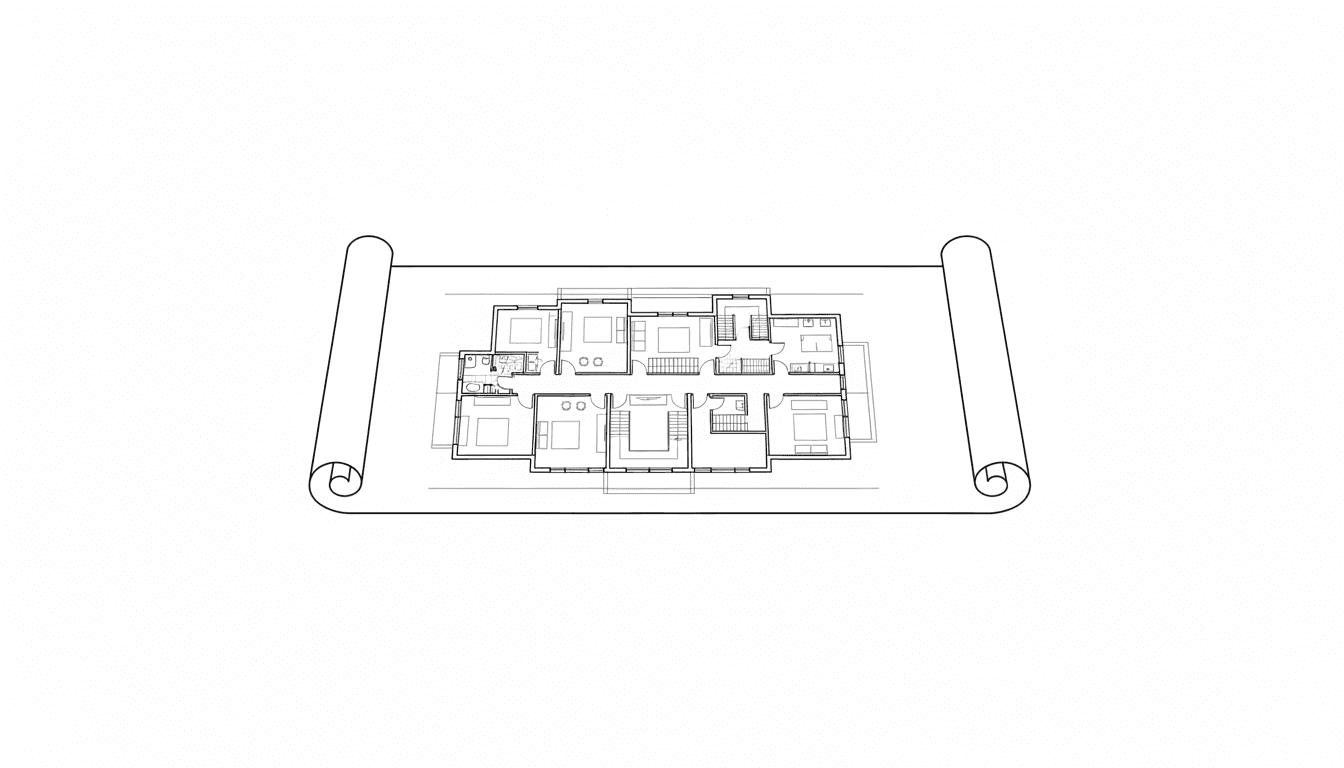
Engaging an external development team is a strategic move for many CTOs and product leaders, offering specialized expertise and accelerated delivery. However, the success of such partnerships hinges almost entirely on one critical factor: the clarity and completeness of your product requirements. Without a meticulously defined scope and detailed specifications, even the most talented external team will struggle to deliver a product that aligns with your vision and business objectives.
Ambiguity in requirements is not just a nuisance; it’s a costly liability. It leads to misinterpretations, extensive rework, project delays, budget overruns, and ultimately, a strained relationship with your development partner. For high-stakes projects, particularly those involving innovative AI products, complex web applications, or scalable SaaS platforms, understanding what product requirements should look like for an external dev team is paramount. It’s the blueprint that transforms abstract ideas into tangible, market-ready solutions.
Why Clear Requirements Are Non-Negotiable
When you entrust your product vision to an external team, you're buying into their expertise and efficiency. That efficiency, however, is only realized with a crystal-clear understanding of what needs to be built.
- Mitigating Risk: Vague requirements are a primary cause of project failure, introducing uncertainty that hinders accurate estimates and timely delivery. Clear requirements reduce the risk of scope creep and unexpected challenges.
- Ensuring Alignment: A well-structured Product Requirements Document (PRD) serves as the single source of truth, ensuring all stakeholders—internal, external, and future users—share a common understanding of the product’s purpose and functionality.
- Facilitating Accurate Estimates: External teams rely on defined scopes. Precise requirements enable accurate planning, leading to predictable budgets and timelines, crucial for financial oversight.
- Enabling Quality Assurance: Robust requirements provide the benchmarks against which the external team's output is measured, ensuring quality and adherence to your vision.
- Building Trust: Providing comprehensive requirements demonstrates your commitment to success, fostering a collaborative environment built on mutual understanding and respect.
What Product Requirements Should Look Like for an External Dev Team: The Anatomy of an Effective PRD
An effective PRD is more than a feature list; it's a comprehensive guide anticipating questions, clarifying assumptions, and providing context. Here’s what it should encompass:
Executive Summary:
- Purpose: Concise overview of the product, its primary goal, and the problem it solves.
- Key Takeaway: The core value proposition for quick understanding.
Problem Statement & Business Case:
- The "Why": Clearly articulate the specific problem the product addresses.
- Business Objectives: How the product aligns with your strategic goals (e.g., increase market share, reduce costs, enhance engagement).
Goals & Key Performance Indicators (KPIs):
- SMART Goals: Define Specific, Measurable, Achievable, Relevant, and Time-bound objectives.
- Success Metrics: How product success will be measured post-launch (e.g., user adoption, conversion rate, system uptime).
Target Audience & User Personas:
- Who are they?: Detailed descriptions of primary users, including demographics, motivations, pain points.
- User Journeys: Map typical user flows and interactions.
Functional Requirements (Features):
- Detailed Descriptions: Clear, unambiguous descriptions of purpose and expected behavior for each feature.
- User Stories (Recommended): "As a [type of user], I want [some goal] so that [some reason]."
- Acceptance Criteria: Crucial for external teams. Define specific conditions for feature completion. Use "Given [context], When [action], Then [outcome]" format.
- Example: Given I am a registered user, When I click "Forgot Password", Then an email with a password reset link is sent to my registered email.
- Prioritization: Assign clear priority (e.g., Must-have, Should-have) to each feature.
Non-Functional Requirements (NFRs):
- Performance: Response times, throughput, concurrent users (e.g., "System supports 10,000 concurrent users with <2s response for critical ops").
- Security: Authentication, authorization, data encryption, compliance (e.g., GDPR).
- Scalability: How the system handles increased load.
- Usability: Ease of learning, efficiency, error handling.
- Reliability: Uptime, MTBF.
- Maintainability: Ease of modification and extension.
- Compatibility: Supported browsers, devices, OS.
- Localization: If applicable (e.g., for global products).
Technical Considerations & Integrations:
- Existing Infrastructure: Current systems, databases, or APIs for integration.
- Preferred Technologies: Constraints or preferences (e.g., "Integrate with Salesforce API," "React front-end").
- Data Migration: Details for migrating existing data.
Design & User Experience (UX):
- Wireframes/Mockups: Visual representations of key screens and flows.
- Prototypes: Interactive models demonstrating functionality.
- Design System/Brand Guidelines: If existing identity must be followed.
- Accessibility Standards: (e.g., WCAG compliance).
Assumptions, Constraints, and Dependencies:
- Assumptions: What are you assuming about market, tech, or user behavior?
- Constraints: Budget, timeline, regulatory requirements.
- Dependencies: External factors or other projects.
Open Questions & Decision Log:
- Unresolved Items: Section for questions needing answers.
- Decision Trail: Document significant decisions, who made them, and why.
Red Flags in Requirements Documentation
Even with the best intentions, pitfalls can derail a project. Be wary of these red flags:
- Vague or Ambiguous Language: Words like "fast," "easy to use," or "scalable" without quantifiable metrics are meaningless. Define "fast" (e.g., "page load under 2 seconds").
- Lack of Prioritization: When everything is a "must-have," it indicates an unclear vision, hindering effective scope management and MVP delivery.
- Inconsistent Information: Contradictory statements lead to confusion and rework.
- Over-Specification of Solutions: Telling the external team how to build, rather than what problem to solve. Trust their implementation expertise.
- Absence of Non-Functional Requirements: Neglecting NFRs like security, performance, or scalability often results in a product that works but is unusable or unmaintainable.
- No Clear Stakeholder for Decisions: Lack of a single point of contact or process for resolving ambiguities halts project progress.
- Static Document Mindset: A PRD is a living document. If not updated, it quickly becomes outdated and irrelevant.
The Collaborative Edge: Partnering for Success
While a robust PRD is foundational, successful external engagement also hinges on process and partnership.
- Structured Discovery Phase: Invest in a dedicated discovery phase before a full build. This allows the external team to understand your business, validate assumptions, refine requirements, and provide accurate, fixed-price proposals. The initial PRD transforms into a shared, actionable plan here.
- Open Communication Channels: Establish regular check-ins (daily stand-ups, weekly reviews) and clear communication protocols. Foster an environment where questions are encouraged and feedback is continuous.
- Iterative Development & Feedback Loops: Embrace agile methodologies with working software delivered in iterations. This allows for early feedback and ensures the product evolves with your vision.
- Empowerment and Trust: Treat your external team as an extension of your own. Provide context, trust their expertise, and empower them to propose solutions.
- Clear Change Management Process: Acknowledge that requirements may evolve. Implement a formal change request process to manage scope adjustments, assess impact, and update the PRD.
The Bottom Line
For CTOs, founders, and product leaders, investing the time upfront to define precise product requirements is the most impactful step you can take to ensure a successful outcome with an external development partner. It translates directly into reduced risk, predictable costs, faster time-to-market, and a product that genuinely solves your business challenges. At Reality Rift, we understand this deeply, not just as a custom software development studio building complex AI products and SaaS platforms for our clients, but also as creators and operators of our own successful products like HelloAria, serving 30,000+ users globally. Our engagement model, which includes a free working demo, a paid fixed-price discovery phase, and milestone billing tied to working software, is specifically designed to align incentives and guarantee clarity from concept to launch and beyond. Ready to discuss your next product vision with a partner who prioritizes clarity and tangible results? book a free 15-min call
Have a project in mind?
Tell us what you're building. We'll give you a straight answer on scope, timeline, and cost — free, 15 minutes.